
Introduction
Pelvic floor dysfunction is a hidden but very common health issue that affects millions of people worldwide. Many people ignore the symptoms due to embarrassment or lack of awareness, but this condition can seriously affect your daily life, confidence, and overall health.
The good news? Pelvic floor dysfunction is treatable, and sometimes even preventable.
What is Pelvic Floor Dysfunction?
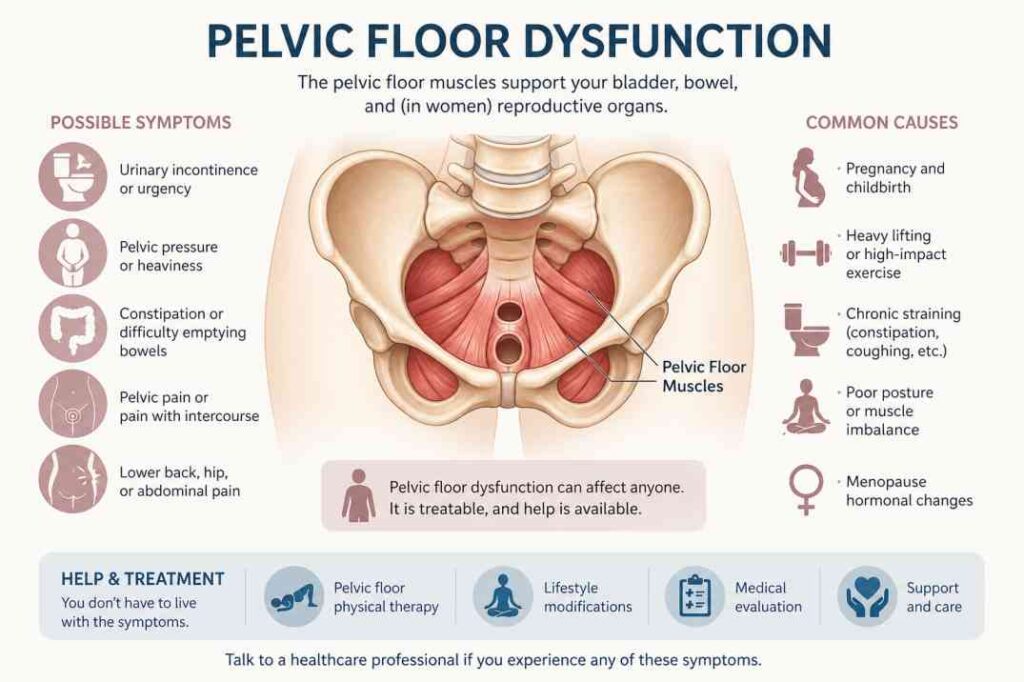
The pelvic floor is a group of muscles, ligaments, connective tissues, and nerves that support key organs such as:
- Bladder
- Uterus (in women)
- Rectum
When these muscles don’t work in coordination, it leads to pelvic floor dysfunction.
This can result in problems with:
- Urination
- Bowel movements
- Sexual health
- Organ support
9 Warning Signs of Pelvic Floor Dysfunction
Here are the most important signs you should never ignore:
1. Lower Back Pain
Pelvic floor muscles are connected to your lower back. Weakness or tightness can cause:
- Posture imbalance
- Back strain
- Chronic pain
2. Constipation
Tight pelvic muscles can make it difficult to pass stool, leading to:
- Straining
- Incomplete bowel movements
3. Bladder Problems
This includes:
- Urinary leakage (incontinence)
- Frequent urination
- Feeling like a constant UTI
- Difficulty emptying bladder
4. Hip Pain
Pelvic floor muscles connect to the hip. Dysfunction can affect:
- Movement
- Stability
- Coordination
5. Pain During Sex
You may experience:
- Pain during intercourse
- Pain during tampon use
- Discomfort during medical exams
6. Erectile Dysfunction (in Men)
Men may face:
- Difficulty maintaining erection
- Premature ejaculation
- Genital pain
7. Tailbone Pain
Even without injury, pelvic muscle tightness can cause:
- Sitting discomfort
- Persistent tailbone pain
8. Unexplained Lower Abdominal Pain
If tests show nothing, pelvic floor tension might cause:
- Cramping
- Sharp or deep pain
9. Pelvic Pain or Pressure
A feeling of:
- Heaviness
- Tightness
- Pressure in pelvic region
Common Types of Pelvic Floor Disorders
1. Urinary Incontinence
Loss of bladder control due to weak or uncoordinated muscles.
2. Pelvic Organ Prolapse
Organs drop due to weak support, causing a bulge sensation.
3. Fecal Incontinence
Loss of bowel control or difficulty managing stool.
Causes of Pelvic Floor Dysfunction
1. Pregnancy & Childbirth
- Vaginal delivery
- Large baby
- Difficult labor
2. Aging & Hormonal Changes
- Menopause
- Reduced estrogen
3. Increased Pressure on Pelvis
- Obesity
- Heavy lifting
- Chronic coughing
- Constipation
4. Nerve Damage & Diseases
- Diabetes
- Stroke
- Parkinson’s disease
5. Muscle Imbalance
- Muscles can be too weak OR too tight
Big Myths You Should Know
❌ It’s normal after childbirth
✔️ No—it’s common but treatable
❌ Only women have it
✔️ Men can also suffer
❌ Kegel exercises fix everything
✔️ Sometimes muscles are tight, not weak
How It Affects Your Life
Pelvic floor dysfunction may not always be life-threatening, but it can:
- Reduce confidence
- Limit social activities
- Affect relationships
- Cause embarrassment
Many people avoid:
- Traveling
- Exercising
- Socializing
When Should You See a Doctor?
You should seek help if:
- Symptoms are frequent
- You feel pain or discomfort
- It affects daily life
👉 Important: Don’t ignore symptoms out of embarrassment.
Treatment Options
1. Lifestyle Changes
- Maintain healthy weight
- Avoid straining
- Quit smoking
2. Pelvic Floor Physical Therapy
- Muscle training
- Relaxation techniques
- Biofeedback
3. Medications
Used for bladder control and urgency.
4. Medical Devices
- Pessaries for prolapse
5. Surgery
For severe cases.
How to Improve Pelvic Floor Health Naturally
✅ Stay Hydrated
Drink around 8 glasses (2 liters) of water daily
✅ Eat Fiber-Rich Foods
Prevents constipation:
- Fruits
- Vegetables
- Whole grains
✅ Avoid Smoking
Reduces risk of bladder problems
✅ Exercise Properly
- Do pelvic exercises (when needed)
- Avoid excessive strain
✅ Don’t Delay Bathroom Use
Give yourself time to empty bladder and bowels
Prevention Tips
- Maintain healthy weight
- Avoid chronic constipation
- Strengthen pelvic muscles early
- Treat underlying conditions
Final Thoughts
Pelvic floor dysfunction is more common than you think—and nothing to be ashamed of.
Ignoring symptoms can worsen the condition, but early treatment can:
✔ Improve quality of life
✔ Restore confidence
✔ Prevent complications
👉 If you notice any warning signs, take action today.
This content is for informational purposes only and does not replace professional medical advice. Always consult a qualified healthcare provider for diagnosis or treatment related to pelvic floor dysfunction or any health condition. Do not ignore medical advice or delay care based on this information. Seek immediate help in case of a medical emergency.