
Aging is a natural part of life, but the foods you eat every day can play a major role in how your body feels, functions, and recovers over time. While no single food can stop aging, a nutrient-rich diet may help support your heart, brain, immune system, digestion, energy levels, and overall wellness.
Many of the world’s healthiest and longest-living populations regularly include simple, natural foods in their daily meals. These foods are often rich in antioxidants, fiber, healthy fats, vitamins, minerals, and plant compounds that help protect the body from inflammation and oxidative stress.
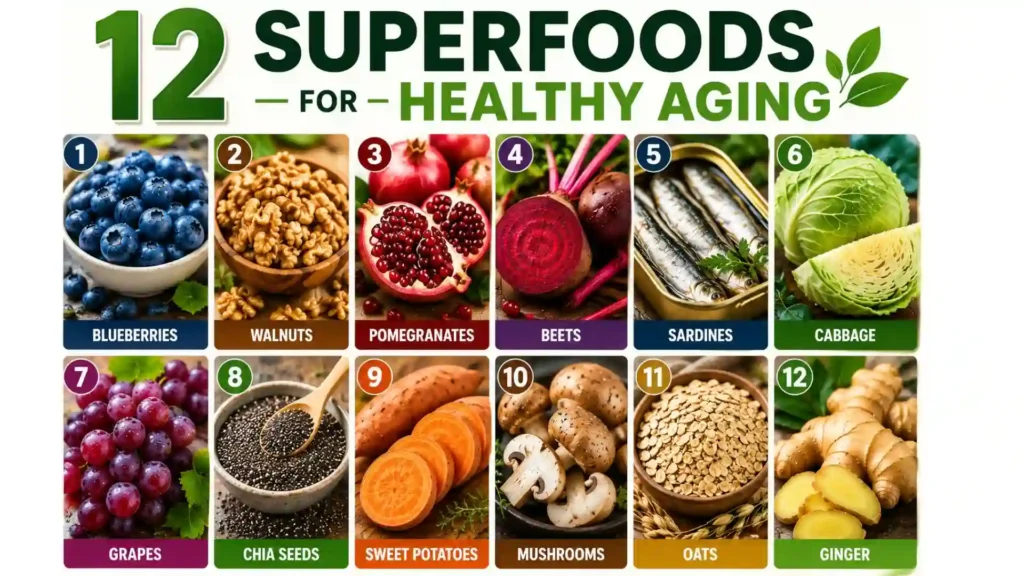
Here are 12 powerful superfoods that may help support healthy aging and long-term wellness.
1. Blueberries
Blueberries are often called one of the healthiest fruits on earth, and for good reason. These small berries are packed with antioxidants that may help protect your cells from damage caused by aging, stress, and inflammation.
They are especially known for supporting brain health. The antioxidants in blueberries may help improve memory, focus, and cognitive function over time. This is why many people refer to them as “brain berries.”
Blueberries may also support heart health by helping maintain healthy blood pressure, circulation, and blood vessel function. They are rich in vitamin C, vitamin K, fiber, and other nutrients that support immunity and overall wellness.
You can add blueberries to oatmeal, yogurt, smoothies, salads, or enjoy them as a simple snack.
2. Walnuts
Walnuts are one of the best nuts for healthy aging because they contain omega-3 fatty acids, antioxidants, fiber, magnesium, and plant-based protein.
One of their biggest benefits is their ability to help support heart and brain health. Walnuts may help reduce inflammation, support healthy cholesterol levels, and protect cells from long-term damage.
They are also filling, making them a smart snack for people who want to manage cravings and maintain a healthy weight. A small handful of walnuts can be added to oatmeal, salads, yogurt, or eaten on its own.
For a longevity-focused diet, walnuts are simple, powerful, and easy to include daily.
3. Pomegranates
Pomegranates are rich in antioxidants and beneficial plant compounds that may help protect the body from cellular damage. Their bright red seeds are naturally sweet, refreshing, and loaded with nutrients.
Pomegranates are especially known for supporting heart health. They may help promote healthy blood flow, support healthy blood pressure, and reduce inflammation that can affect the arteries over time.
They also contain vitamin C, which supports the immune system, and their fiber content makes them a healthier alternative to processed sugary snacks.
You can enjoy pomegranate seeds on their own or add them to salads, yogurt, smoothies, and healthy bowls.
4. Beets
Beets are one of the best foods for circulation and heart health. They contain natural nitrates, which may help improve blood flow and support healthy blood pressure levels.
Better circulation can help the body deliver oxygen more efficiently, which may support energy, endurance, brain function, and overall wellness.
Beets are also rich in antioxidants, folate, potassium, vitamin C, and fiber. These nutrients support digestion, immunity, and cell protection.
You can eat beets roasted, juiced, blended into smoothies, or added to salads. Their deep red color is a sign of the powerful plant compounds inside.
5. Sardines
Sardines are small fish with impressive nutrition. They are packed with high-quality protein, omega-3 fatty acids, calcium, vitamin D, selenium, and vitamin B12.
Their omega-3 fats may help support heart health by reducing inflammation and supporting healthy cholesterol levels. Sardines are also excellent for bone strength because they naturally contain both calcium and vitamin D.
Vitamin B12 and selenium also support energy, brain function, and the immune system.
You can eat sardines on toast, in salads, with rice, or mixed into healthy meals. They are simple, affordable, and nutrient-dense.
6. Cabbage
Cabbage is one of the most underrated foods for long-term health. It is affordable, easy to cook, and full of vitamins, antioxidants, fiber, and plant compounds.
Cabbage may support the body’s natural detoxification process and help the liver process waste more efficiently. It is also rich in fiber, which supports gut health and regular digestion.
A healthier gut may help support immunity, reduce inflammation, and improve overall wellness.
Cabbage also contains vitamin C and vitamin K, which support immune function, skin health, and bone health. You can eat it raw in salads, cooked in soups, stir-fried, or fermented as sauerkraut.
7. Grapes
Grapes are naturally sweet and full of antioxidants. Red and purple grapes are especially known for containing resveratrol, a plant compound often studied for its potential heart-supporting and anti-aging benefits.
Grapes may help support circulation, protect blood vessels, and reduce oxidative stress. They also contain vitamin C and other antioxidants that help protect cells from damage caused by aging and unhealthy lifestyle habits.
Because they are naturally sweet, grapes can also help satisfy sugar cravings in a healthier way than processed snacks.
Enjoy them fresh, frozen, in salads, or blended into smoothies.
8. Chia Seeds
Chia seeds may be tiny, but they are extremely nutrient-dense. They are rich in fiber, plant-based omega-3 fatty acids, protein, and antioxidants.
Their high fiber content supports digestion, fullness, and more stable energy levels. Fiber may also help support healthy blood sugar levels and weight management.
Chia seeds absorb water and expand, which helps promote fullness and hydration. Their omega-3 fats may also support heart and brain health while helping reduce inflammation.
You can add chia seeds to smoothies, yogurt, oatmeal, overnight oats, or make chia pudding.
9. Sweet Potatoes
Sweet potatoes are one of the healthiest carbohydrate sources you can add to your diet. Unlike heavily processed carbs, they provide slow, steady energy.
They are rich in beta-carotene, which the body converts into vitamin A. This nutrient supports eye health, immune function, and healthy skin.
Sweet potatoes also contain fiber, which supports digestion, gut health, and fullness. Their antioxidants may help protect cells from inflammation and aging-related damage.
You can enjoy sweet potatoes baked, roasted, mashed, or added to bowls and salads.
10. Mushrooms
Mushrooms are often overlooked, but they are packed with unique nutrients and compounds that may support healthy aging.
They contain antioxidants that help protect cells from oxidative stress. Some types of mushrooms may also support immune function and brain health.
Mushrooms are naturally low in calories while still providing selenium, potassium, B vitamins, and fiber. This makes them a great food for energy, immunity, and overall wellness.
You can add mushrooms to soups, omelets, stir-fries, pasta, salads, or grain bowls.
11. Oats
Oats are one of the best everyday foods for heart health and long-term wellness. They contain soluble fiber called beta-glucan, which may help support healthy cholesterol levels.
Oats also help support digestion, fullness, and steady energy. Unlike sugary breakfast foods that can cause energy crashes, oats digest slowly and provide more balanced fuel.
They are affordable, easy to prepare, and suitable for many diets.
You can enjoy oats as oatmeal, overnight oats, smoothie blends, or homemade healthy snacks.
12. Ginger
Ginger has been used for centuries as both a flavor booster and a natural wellness food. It contains antioxidants and plant compounds that may help reduce inflammation and support digestion.
Many people use ginger for bloating, nausea, and stomach discomfort. A healthy digestive system can help the body absorb nutrients better and support overall wellness.
Ginger may also help protect cells from oxidative stress caused by aging and unhealthy lifestyle habits.
You can add ginger to tea, smoothies, soups, stir-fries, juices, and cooked meals.
How to Add These Superfoods to Your Daily Diet
You do not need to eat all 12 foods every day. A better approach is to slowly include more of them in your weekly routine.
For example, you can start your morning with oats, chia seeds, and blueberries. Add cabbage or mushrooms to lunch. Snack on walnuts or grapes. Use ginger in tea. Add sweet potatoes, beets, or sardines to dinner.
The goal is consistency. Small daily food choices can create powerful long-term benefits.
Final Thoughts
Healthy aging starts with the foods you eat regularly. Blueberries, walnuts, pomegranates, beets, sardines, cabbage, grapes, chia seeds, sweet potatoes, mushrooms, oats, and ginger are all nutrient-rich foods that may support your heart, brain, immune system, digestion, energy, and overall wellness.
These foods are not magic cures, but they can be valuable parts of a balanced lifestyle. When combined with regular movement, quality sleep, hydration, stress control, and a healthy routine, they may help your body stay stronger and healthier as you age
Medical Disclaimer:
The information provided in this article is for general educational and informational purposes only and should not be considered medical advice. It is not intended to diagnose, treat, cure, or prevent any disease or health condition. Always consult a qualified healthcare professional, doctor, or registered dietitian before making any major changes to your diet, lifestyle, supplements, or treatment plan, especially if you have a medical condition, are pregnant, taking medication, or following a specific health program.
FAQs
What are the best superfoods for longevity?
Some of the best foods for longevity include blueberries, walnuts, pomegranates, beets, sardines, cabbage, grapes, chia seeds, sweet potatoes, mushrooms, oats, and ginger.
Can superfoods help slow aging?
Superfoods cannot stop aging, but nutrient-rich foods may help protect cells from inflammation, oxidative stress, and damage that can affect long-term health.
Which superfoods are best for heart health?
Blueberries, walnuts, pomegranates, beets, sardines, oats, grapes, and chia seeds may help support heart health naturally.
Which foods are good for brain health?
Blueberries, walnuts, sardines, mushrooms, grapes, and chia seeds may support memory, focus, and cognitive function over time.
How often should I eat superfoods?
You can include a few superfoods in your meals daily or rotate them throughout the week. Consistency is more important than eating all of them at once.