
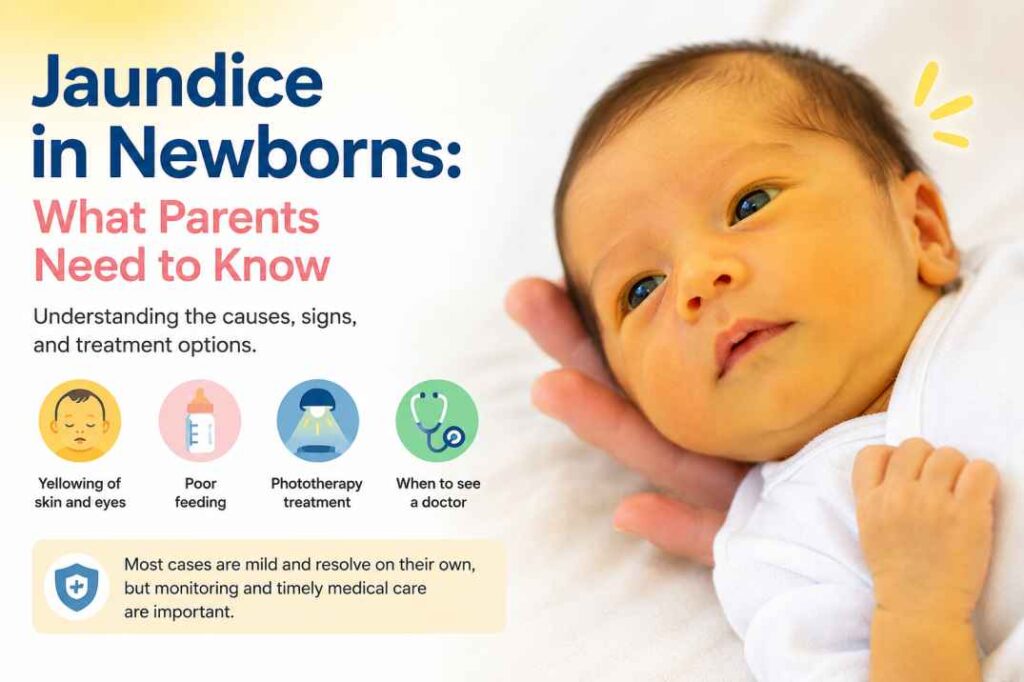
Jaundice in newborns is a common condition where a baby’s skin and eyes turn yellow due to a buildup of bilirubin in the blood. This happens because a newborn’s liver is still developing and cannot remove bilirubin efficiently.
It usually appears within the first few days after birth and often goes away on its own. However, if it lasts longer than 2–3 weeks, or if the baby has pale stools or feeding issues, medical attention is needed.
Why Is Jaundice Common in Newborn Babies?
Jaundice is common in newborns during the first few days of life because their bodies are still adjusting after birth.
- Before birth, the mother’s body removes the baby’s bilirubin. After birth, the baby’s liver must do this job, but it may take time to work efficiently.
- Newborns also have extra red blood cells, which break down after birth and produce more bilirubin.
In some cases, jaundice can occur due to other reasons, like blood group incompatibility between mother and baby, which can increase bilirubin levels. This is why doctors closely monitor newborns in the early days.
Causes of Jaundice in Newborns
Jaundice in newborns occurs mainly due to a buildup of bilirubin in the blood. This happens for several common reasons:
- Immature liver: A newborn’s liver is not fully developed, so it cannot process and remove bilirubin efficiently.
- Increased breakdown of red blood cells: Babies have more red blood cells, which break down quickly after birth, producing extra bilirubin.
- Physiological jaundice: This is the most common type and happens as part of normal newborn development.
Other Causes and Risk Factors
- Premature birth: Preterm babies have an even less developed liver.
- Birth bruising or hematoma: Breakdown of collected blood increases bilirubin levels.
- Blood group incompatibility (ABO/Rh): Causes faster destruction of red blood cells.
- Poor feeding (breastfeeding jaundice): Less milk intake reduces bilirubin removal through stool and urine.
- Breast milk jaundice: Certain substances in breast milk may slow bilirubin processing.
- Family history: If siblings had jaundice, risk may be higher.
Rare Causes
- Liver or intestinal problems
- Infections
- Blood disorders or enzyme deficiencies
Most cases are normal and temporary, but monitoring is important to prevent complications.
Signs and Symptoms to Watch For
Parents should watch for the following signs of jaundice in newborns:
- Yellowing of skin and eyes: This is the most common sign, usually starting on the face and spreading to the chest and body.
- Yellow color inside the mouth: Sometimes seen on the gums or roof of the mouth.
- Poor feeding: Baby may not feed well or show less interest in feeding.
- Sleepiness or low activity: Baby may seem more tired than usual.
- Dark urine: Urine may appear darker than normal.
- Pale or light-colored stools: This can be a warning sign that bilirubin is not being properly eliminated.
If symptoms worsen, appear within the first 24 hours, or last longer than 2–3 weeks, medical evaluation is important.
Treatment Options for Newborn Jaundice
Treatment for jaundice may not be necessary for mild cases, as many infants improve without intervention. However, in cases where bilirubin levels are high, phototherapy may be used. This involves placing the baby under special lights that help break down bilirubin in the skin.
In more severe cases, a blood transfusion may be required to quickly reduce bilirubin levels, especially if there is an underlying condition contributing to the jaundice.
When to Seek Medical Attention
It is crucial for parents to contact a healthcare provider if they notice any signs of jaundice, especially if the yellowing appears within the first 24 hours of life, or if the jaundice seems to worsen.
Additionally, if the baby shows signs of dehydration, poor feeding, or lethargy, parents should seek medical attention immediately to ensure the baby receives appropriate care.
This content is for informational purposes only and is not a substitute for professional medical advice, diagnosis, or treatment. Always consult a qualified healthcare provider for any medical concerns. Do not ignore or delay seeking medical help based on this information.